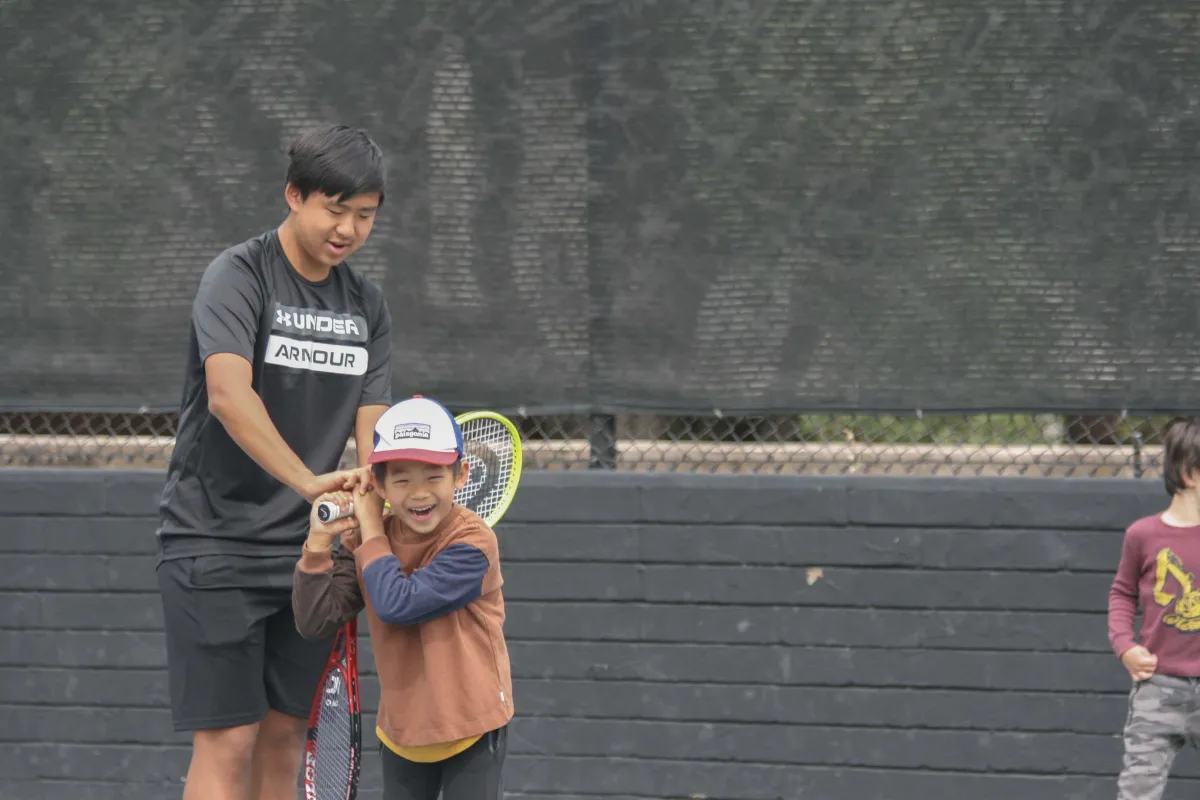
More Than Just a Game: How Youth tennis lessons in Santa Clara Build Lifelong Character
Many parents enroll their children in youth sports with a simple, straightforward goal in mind: helping them get some exercise, burn off endless energy, and have a bit of fun after school. However, when you look at the sport of tennis, you quickly realize that the benefits extend far beyond physical fitness.
At the Silicon Valley Tennis Academy (SVTA), under the expert guidance of head coach Coach Francisco Ruiz, we believe that the tennis court is actually one of the most powerful classrooms available for a child’s personal development and character growth.
When children participate in our tennis lessons in Santa Clara, they are not just learning how to hit a ball; they are embarking on a process-oriented journey that prepares them for the challenges of life, building what legendary coach Paul Annacone calls "championship people".
The Court as a Classroom for Character and Life Skills
Tennis is a unique sport. Unlike team-based activities where a player can hide behind their teammates or rely on a substitution when things get tough, tennis is an individual sport that places a massive amount of personal responsibility on the shoulders of the young athlete. On the court, children must learn to navigate adversity, make quick tactical decisions under pressure, and deal with immediate failure and success entirely on their own.
According to sports education research, tennis offers unmatched opportunities for learning essential life skills such as discipline, perseverance, and fair play. When young players face challenges on the court, they are experiencing scenarios similar to those they will face in the real world. Overcoming these obstacles, managing emotional frustration, and developing strategies for success help children grow in resilience and adaptability. These on-court experiences directly aid personal development and foster a healthy "we can do it" attitude that lasts a lifetime.
Furthermore, tennis is highly effective at encouraging positive social behavior. Because players must call their own lines, keep track of their own score, and interact directly with their opponents, the sport places a heavy emphasis on respect, fairness, and manners.
The strict rules and long-standing traditions of the game instil a deep sense of discipline and integrity, guiding young players to act honorably both on and off the court. This persistent focus on moral behavior positively shapes wider social relations, helping juniors learn to treat others with respect and cooperate in a competitive environment.
The Science of Scaled Play: Protecting Your Child's Progress
A common mistake in youth tennis is treating children like miniature adults. For decades, young kids were handed heavy, adult-sized rackets and forced to play on massive courts with high-bouncing yellow tennis balls. This old approach is a recipe for extreme frustration and early athletic burnout. A child who is constantly frustrated by the tools of the game will quickly lose their passion for the sport.
To solve this problem, Silicon Valley Tennis Academy utilizes the internationally recognized Tennis10s and "Play and Stay" frameworks. Initiated by major tennis bodies and sponsored globally, this program is based on the innovative philosophy of "learning through play". By using modified equipment—including slower-bouncing balls, smaller rackets, and scaled-down courts—children learn the game faster and with far less internal stress.
Red Stage (Ages 4–7): This initial stage utilizes large, low-compression foam or high-density felt balls that bounce 75% slower than standard yellow balls. Played on mini courts (10.97–12.8m by 4.88–6.1m) with lower nets (31.5–33 inches), this stage keeps the ball in the child's optimal hitting zone between their hips and shoulders. Rackets are scaled down to 23 inches or shorter.
Orange Stage (Ages 8–10): As children grow, they transition to orange felt balls that bounce 50% slower than yellow balls. The court size is slightly expanded to 17.98–18.29m by 6.4–8.3m, with a net height of 31.5–36 inches. Rackets are up to 25 inches in length.
Green Stage (Ages 10–11): This final transitional stage utilizes green dot felt balls that are 25% slower than yellow balls, played on a full-sized tennis court.
Using this scaled equipment is vital for a child’s physical safety and technical development. Handing a young junior a racket that is too heavy or a ball that bounces too high forces them to change their grips to accommodate the high bounce, leading to the development of "extreme grips" or structural arm injuries.
By keeping the ball slow and low, Coach Francisco Ruiz ensures that children develop clean, biomechanically sound strokes and build early tactical awareness, keeping the game easy and fun.
Navigating the Parent-Coach-Athlete Triad
The behavior and involvement of parents play a monumental role in a young athlete's tennis journey. Because children are highly influenced by the behavior of their parents at a young age, parents can either be a powerful grounding force or a source of immense competitive pressure.
At Silicon Valley Tennis Academy, we advocate for a healthy, supportive parent-coach-athlete triad. Our curriculum emphasizes that parents must understand that learning to play and compete is a gradual, long-term process.
To assist in creating a positive, nurturing playing environment, parents should try to focus on how their child is developing tennis skills, showing effort, and enjoying the game, rather than obsessing over competitive results or match outcomes. Praising a child excessively for winning matches can put added pressure on them, often leading to acting out on the court.
As Martin van Daalen, a veteran youth coach, notes in his coaching guidelines, parents should "grant children the pleasure to experience the sport for themselves and let them evolve to their potential". Van Daalen offers several essential tips for tennis parents to maintain a healthy relationship with their children:
Trust Professional Expertise: If you are not an experienced coach, have your child coached by a professional. Your child will enjoy you as a parent much more!
Avoid Unsolicited Advice: Try not to interfere by giving technical suggestions on the court. While well-intentioned, it often confuses the player and undermines their development.
Promote Independence: Let your children make their own decisions about their training and tournament preparation. This builds their confidence and teaches them to take responsibility for their own game.
Preserve Time for Peers: Give your children time and space to build relationships with their playmates. These social connections are an important reason why they stay in the sport.
The "One Voice" Principle: Establishing Clarity and Trust
One of the most important components of our junior development philosophy at Silicon Valley Tennis Academy is the "One Voice" principle. Tennis requires a player to quickly adapt to changing situations and solve complex tactical puzzles in real time. To do this effectively, the junior must develop independent, analytical thinking on court.
When a child is constantly hearing competing instructions—from a passionate parent on the sidelines and a certified professional coach on the court—their focus breaks down. Too many voices fade out the clear, concise information they need to process. Instead of searching for solutions from within their own mind, the player will constantly look to the sidelines for external validation and support, resulting in a loss of confidence and tactical inconsistency.
By establishing "one voice" on court, parents and coaches establish a unified, nonjudgmental working community. The coach acts as the technical and tactical guide, while the parent serves as the ultimate source of unconditional love and emotional support. This boundary protects the parent-child relationship and allows the young player to step onto the court with a clear, focused mind, ready to play and learn.
Conclusion
Ultimately, the goal of our tennis lessons in Santa Clara at the Silicon Valley Tennis Academy is to build a foundation of positivity that will stay with your child for a lifetime. If we start their athletic education early, focusing on correct techniques, process-oriented goals, and a joyful approach to challenges, their default response to future adversity will be an optimistic, resilient one.
Under the expert guidance of Coach Francisco Ruiz and our dedicated coaching staff, your child will not only learn to love this lifetime sport but will also develop the character, discipline, and confidence to navigate the game of life
